Imagine that you could inflict pain on your enemies without having any actual contact with them; imagine that you could imbue items with a supernatural power which would make them itch or fester or shrink; imagine if this was possible and that you could do this without it being traced back to you.
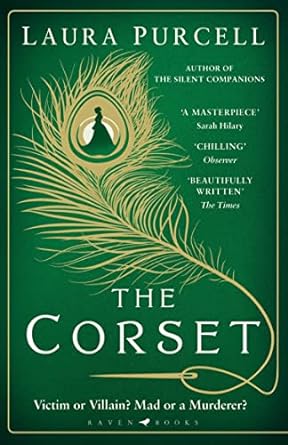
This idea is part of the story of Ruth Butterham, the prisoner who Dorothea Truelove, a privileged young woman, visits in prison, ostensibly to measure her head. That needs explanation: Dorothea has an interest in phrenology and the idea that the shape and size of our head has a bearing on the way we act and that by assessing this part of our anatomy, certain predictions can be made about our behaviour. Specific areas of the skull have been denoted to have a significance tied to individual personality traits and so, with some careful feeling with fingers and a tape measure, you would be able to tell if someone had empathy, for example, or whether they were prone to obstinacy, as another.
Ruth is someone who Dorothea is interested in assessing and so, they meet and the narrative deals with both Dorothea’s and Ruth’s stories with them running alongside each other. Ruth describes her life and what has brought her to this point and Dorothea relates changes that are currently happening in hers.
There are parallels between the two women’s lives which I will not reveal here, although they are from very different backgrounds. They both deal in the tragedy of losing loved family members although Ruth’s story is by far the most tragic and it is fair to say brutal. Set in Victorian England, The Corset takes us into a world where people have few opportunities and that getting on in life is more dependent on the family into which you have been born rather than how hard you work.
What is also key to this book is that all is not what it seems: people appear to be one thing but may actually be something quite different so knowing who to trust is difficult. Purcell uses this to twist and turn the narrative culminating in a great and satisfying ending, which is surprising and leaves you questioning exactly what is truth and what is belief.
There is no question that I will read works by Laura Purcell again.
 Scuffed Granny