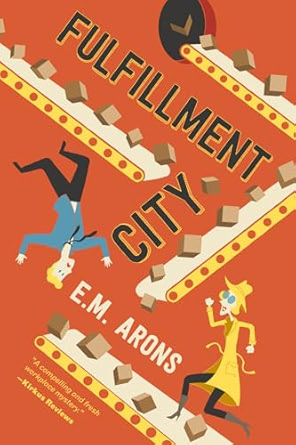
I really enjoyed E.M. Arons’ book. It was, in some ways, very much a book of our times and yet, it had echoes of themes which have consistently affected humans in the eons before the 21st century.
Our main characters are Lydia and Paul. Lydia was previously a successful marketer, promoting businesses with flair and aplomb and generally being thought of as one of the best in San Francisco. But then, she experiences something which sets her on a wayward path and as the book starts, she is struggling to come back from there. Her colleague and friend, Paul shows concern for her personally, but her business is his business and so he needs her to shape up or his future is looking uncertain too.
Lydia needs to be shaken out of her depression and self-inflicted withdrawal and when a new opportunity arises that will take them both out of San Francisco, it could be just the new start that Lydia needs.
And so, they set off for Colorado to a settlement called Saltair Springs which has been specifically built as a place for a mail order depot, where people order online and their purchased goods are distributed from this centre.
Lydia’s job is to present this place so that she makes it seem like the promised land: a place of opportunity, of fulfilment, a place to come to. But it soon transpires as Lydia interviews some of the residents that all is not great here and it may be tricky for even a woman of her expertise to show its good points. As she spends more and more time there, Lydia discovers something far more sinister going on…
This book reads well. Paul is catty but caring and his dialogue is witty and dry. He is the perfect counterfoil for Lydia’s more staid and measured approach. I think that Arons’ depiction of their dynamic is spot on – believable, realistic, everything you would want to have conveyed through a friendship/work relationship.
The premise of the book is something modern, with the mercantile nature of society today paving the way for a settlement to be created solely to comply with the needs of a consumer but as I said, there are many themes in this book that show humanity’s discontent with their lives: overwork and how the worker is exploited; dissatisfaction in marriage and how that translates into life away from the spousal home; how society is driven by consumerism; how we should be looking out for each other with a view to helping ourselves in the process.
And really, hasn’t economics always been a driver for man through the ages: what can be gained from someone else and put into our own pockets, and how that can be maximised?
A well-written, well-plotted story with a satisfying conclusion, engaging in its style and speckled with humour and humanity.
Rachel Rating: 4 out of 5 stars
 Scuffed Granny