A visit to an exhibition of paintings by Darrell Warner at Wallsworth Hall, Twigworth 12th May 2026
On Tuesday night, I was a little naughty. I indulged in culture, in a night supporting the arts. I should have been at a Parent Teacher Association meeting, discussing the raising of funds for the desperately needed school minibus but I eschewed this for a private invitation to a viewing of Darrell Warner’s latest exhibition Crucifixion. Don’t think too badly of me. In fact, let’s move the focus from me and on to Darrell and his works.
You may not have heard the name but you will know Darrell’s work, I can guarantee it. In order to help you recognise him, have a look at the link below. He’s been involved in some pretty cool Hollywood stuff as a concept artist.
But this was not about Hollywood. The exhibition that I was lucky enough to receive a special preview of was nothing to do with pirates and wicked witches of the west. It was very much to do with birds and more specifically, dead birds.
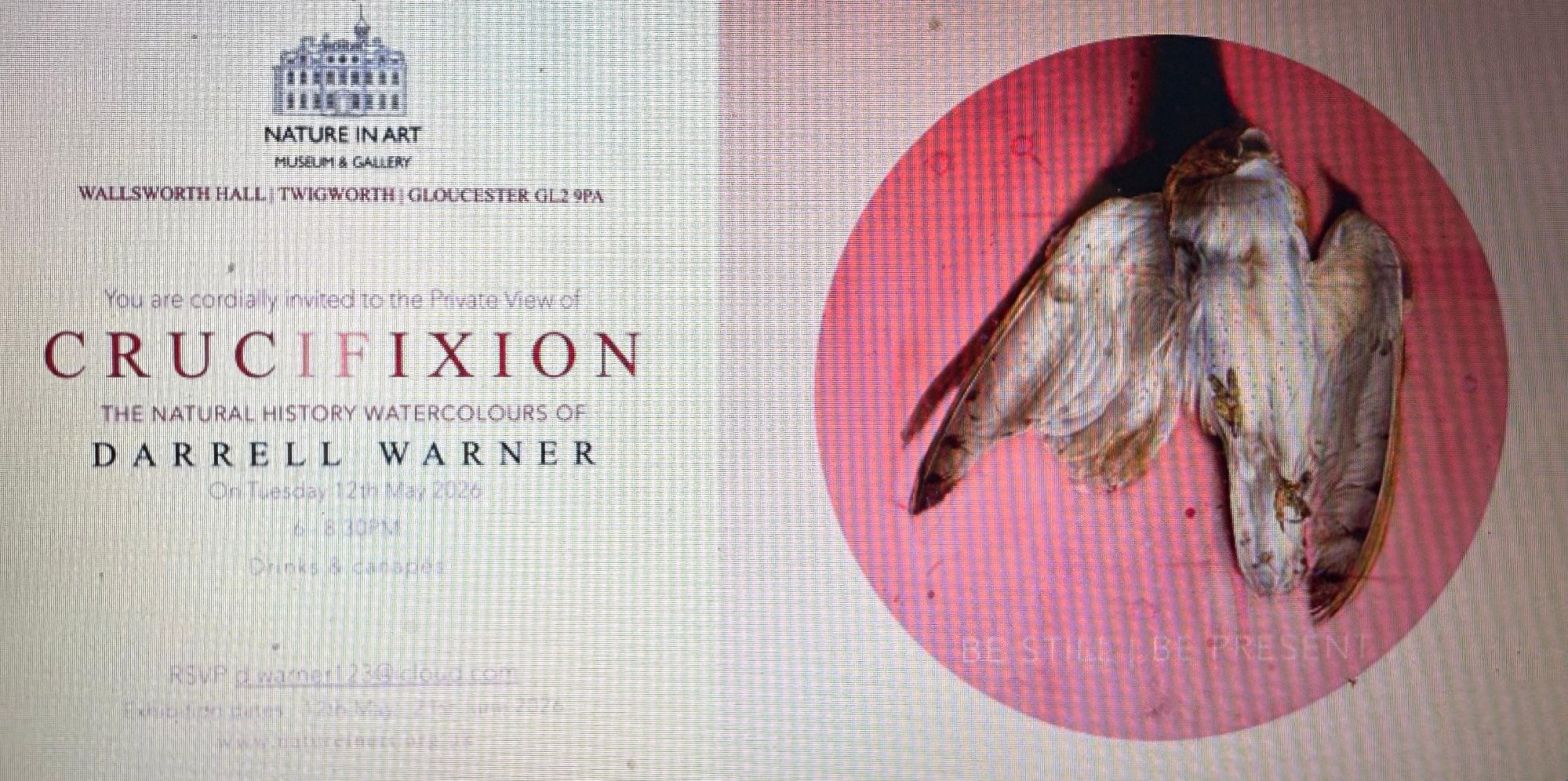
It all sounds a little macabre, doesn’t it? And I have to say that in a way, it was. One only has to look at the dramatic depiction of a barn owl that acts as the cover piece to his publicity and you are confronted with a beautiful creature, captured in its death pose, with curled feet, one of its wings splayed, inert and beyond saving. Its stillness strikes at you.
However, this is entirely the point of this exhibit, to disturb you and challenge you. Click on the link below and discover the pictures for yourself.
https://www.darrellwarner.co.uk
This is about art, yes but it is also about delivering a message, from a man who is using his skills to depict it in the best way he knows how.
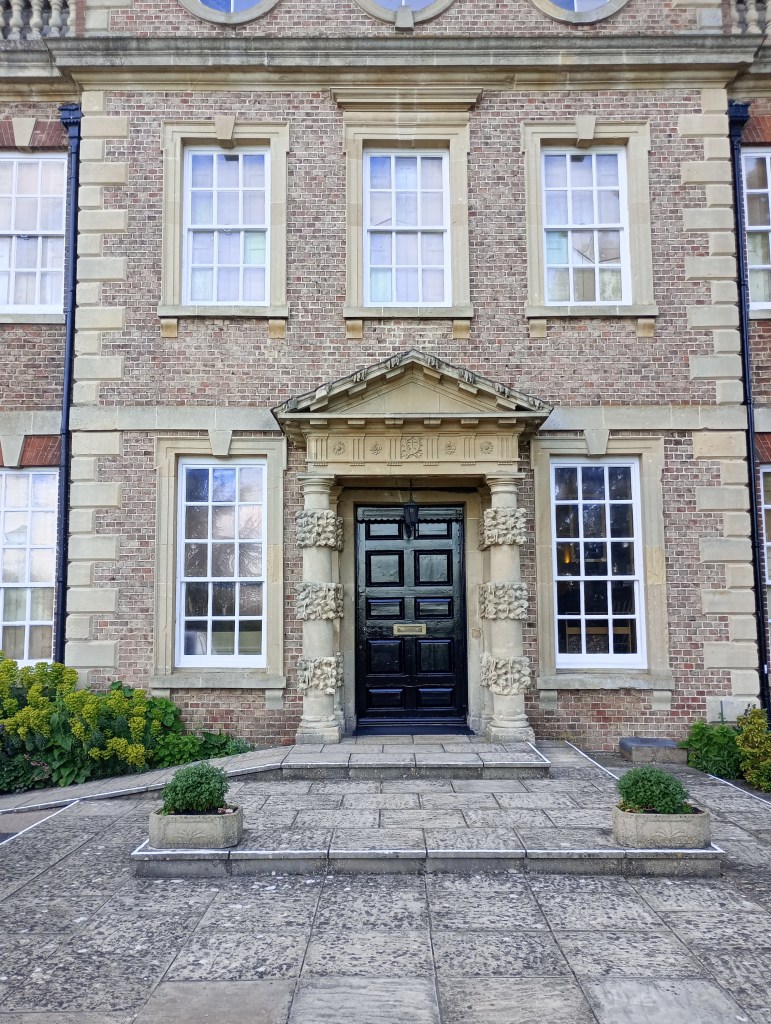
Imagine the setting: it is a big country house. Not big enough to be stately although it has a stateliness to it with its Georgian proportions and symmetry. It has a driveway, although the visitors’ car park where I parked is adjacent to this, tucked behind a hedge under some trees.
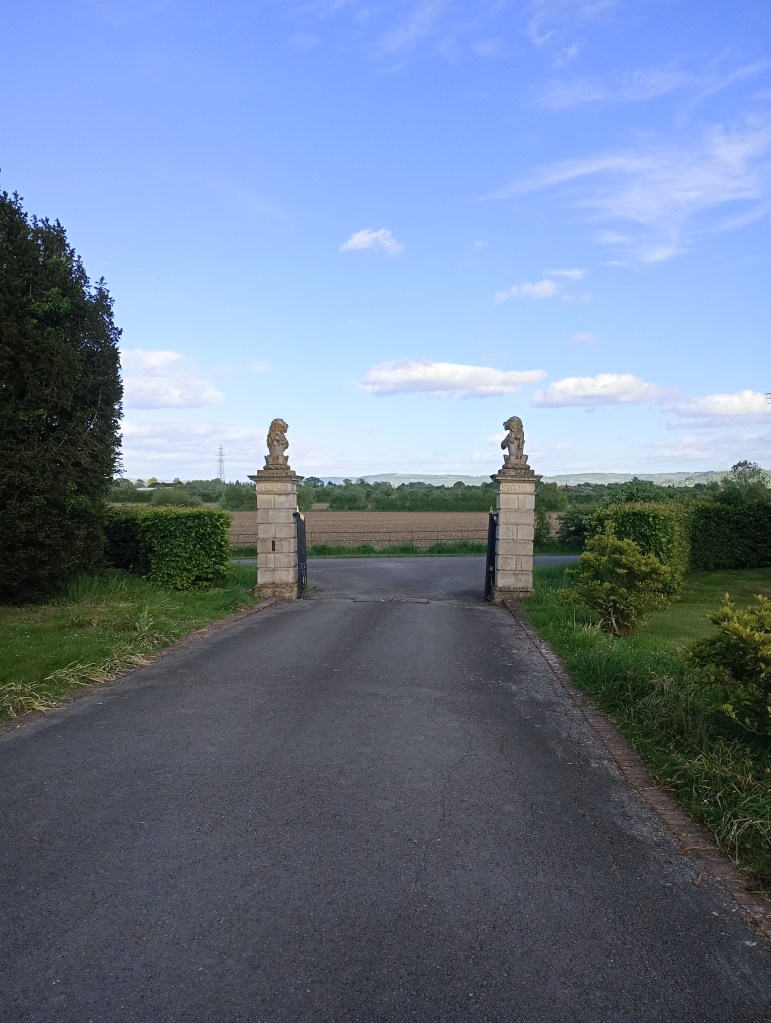
The house faces a field which spreads out beyond the gateposts where the lions that guard the entrance sit, watchful but still, lichen covered. Tall conifers dominate, meaning that the view to the open land is buffered by them, drawing your eye to what lies beyond.
The black door is imposing. I tentatively opened it, wondering if I had reached the right entrance or whether there was another entryway for lesser people. As it swung open, I was greeted by a gentleman who held open a further glass door, leading from this entryway to a shop with the normal temptations one finds in a place of this nature.
To either side of this hallway were rooms, panelled rooms and in these, within the insets made by the wooden detailing, are pictures.
It is a sedate setting, quiet and composed. There are not many of us there as it is an exclusive viewing. Display cases feature other wonders of the natural world that have been collected by Darrell alongside his depictions of them and other creatures. On the walls, the pictures hang, framed differently depending on the subject matter. Some have darker mounts which serve to focus the viewer’s eye and lead it into the detail of the painting, like seeing it under a microscope or catching a glimpse of it through a keyhole. They also make the images more striking, like a visual assault, the blackness of the surround acting as a contrast to the vividly rendered image it holds.
The exhibition then becomes a paradoxical mix of the glorious and the pitiful. I was struck with wonder and sadness as I walked around, looking closely at the pictures and reading the small summary underneath each one. The birds (along with some other creatures) are immortalised and reverently so, with the minute detail of their plumage outlined in hyper realism. But they are dead, having been grounded in the most final way possible. They lie, prone, their gracefulness halted forever, their liveliness dissipated in death.
It is difficult not to feel moved.
This was obviously a motivator for Darrell too. Finding dead birds on walks during Covid lockdowns made him realise the impact that humans have on the creatures with whom we share the world – hit by cars, trapped in greenhouses, stunned by conservatory windows, hunted by cats. We take the presence of our feathered companions for granted – what would the world be like without them?
I get an inordinate amount of pleasure from birds: whether watching tits feeding in my garden or observing little puffins out at sea from a boat or hearing the honking of geese above me in their V-formation or the sound of a flock of galahs passing overhead before roosting. These noises and sights are rooted in some of my best memories. I can’t imagine not hearing or seeing them again.
My overriding feeling on leaving the exhibit was one of sadness and poignancy. I stood outside for a moment and stopped. Twilight had not yet arrived but the light was changing and I could hear but not see a bird calling. It was near and I searched for it but it remained hidden. The fact that I couldn’t see it felt like a timely reminder, a message in itself and one that was reinforcing Darrell’s, that the creatures with which we share the earth should be respected and wondered at rather than disregarded with no care given.
I thought about Crucifixion and the sacrifice these animals make in order for us to just continue with what we want to do without hindrance or obstacle. It hardly seems right for us to be so selfish and so unaware.
I drove home with care, ever watchful of the verges and mindful of the hedges, feeling sad at the people walking past with their heads downwards towards screens, headphones on. I was heavy with thought and in sombre mood. Those images will stay with me.
But it was not all gloom. Paradoxically, I also felt lighter, improved even, and this was for one simple reason: I had had the experience of viewing some exceptional art, created by human hand and crafted from human sentiment, care being the watchword in its process and its execution.
In what sometimes feels like the modern dark ages with AI and the worship of wealth, that feels pretty grand.

